0Every OBG resident should know that residency is a constant balance between the Trickey lectures, ward postings, clinical duties, and exam preparation. Although managing all of this becomes more easier when your study material is very well concise, well-structured, and especially designed for practical learning.
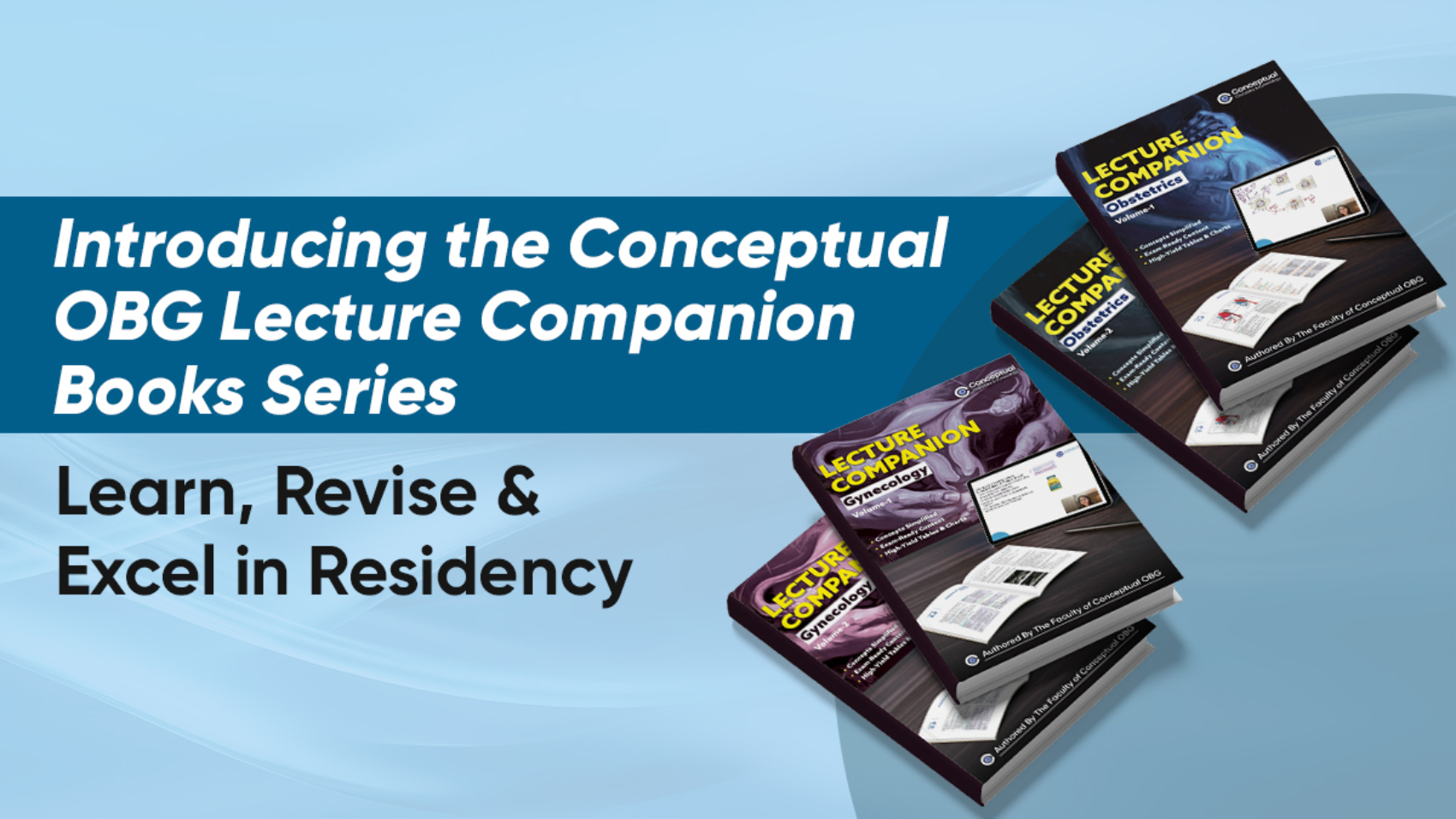
That’s exactly why the Conceptual OBG Lecture Companion Series has been created.
Designed to complement the Conceptual OBG lecture program, these books help you build concepts systematically while giving you the flexibility to create your own personalized revision notes throughout residency.
Why Choose the Conceptual OBG Lecture Companion?
Unlike conventional notes, the Lecture Companion is designed to help you learn actively, not just read.
With every volume, you get:
High-yield concept-based notes
Clinical flowcharts, diagrams & tables
Important classifications and exam pearls
Space to add your own annotations and clinical insights
A structured format for faster revision during exams
As you progress through residency, these books gradually become your own personalized learning companion.
Explore the Complete Series
Obstetrics
Lecture Companion Obstetrics Volume 1 Covers the core concepts of obstetrics with a structured approach for everyday residency learning and exam preparation.
Lecture Companion Gynecology Volume 1 Focuses on fundamental gynecology concepts, making complex topics easier to understand through concise explanations.
Lecture Companion Gynecology Volume 2 Covers advanced gynecology topics with an exam-oriented and clinically relevant approach for postgraduate residents.
The Lecture Companion Series helps simplify learning, strengthen concepts, and make revision more organized.
Start Learning Smarter
Strong concepts lead to confident clinical decisions, and the right study companion makes that journey easier.
The Conceptual OBG Lecture Companion Series is exclusively available to Premium subscribers, making it a valuable addition to your residency learning journey.
If you are currently sorting through your post-graduate counseling preferences, you have undoubtedly heard this warning. Obstetrics and Gynaecology (OBG) is easily one of the most polarizing branches in clinical medicine. Seniors in the department will tell you they barely sleep, yet they often admit they wouldn’t dream of switching to any other field.
The reality of a post-graduate residency in Obstetrics and Gynaecology is intense, but the professional payoff is immense. It is one of the rare specialties that seamlessly fuses long-term medical care with high-stakes surgical intervention.
If you are weighing OBG during this counseling session, here is an unfiltered breakdown of the scope, residency life, finances, and long-term trajectory of the branch.
Why the Demand for OBG Only Continues to Grow?
Every hospital, from rural community health centers to elite corporate metros, requires an OBG specialist. Unlike organ-specific tracks, OBG centers entirely on women’s health across their entire lifespan.
On any given week, your schedule might look like this:
Managing a complex, high-risk pre-eclampsia case in the morning.
Performing an emergency lower segment cesarean section (LSCS) at 2:00 AM.
Consulting on adolescent endocrine issues or fertility barriers in the outpatient department (OPD).
Performing elective major surgeries like total laparoscopic hysterectomies.
Few specialties give you this level of clinical variety. Furthermore, the emotional reward is immediate. Bringing a new life into the world or successfully navigating a critical post-partum hemorrhage creates a profound sense of clinical accomplishment that few desk-bound specialties can replicate.
Let’s not sugarcoat it: OBG residency is notoriously exhausting.
Labour rooms do not respect office hours. As a resident, your schedule will be dictated by unpredictability. You will face heavy night duty rotations, prolonged hours on your feet in the labor room, back-to-back emergency admissions, and demanding theater schedules. There will be days when eating a proper meal or catching a four-hour stretch of sleep feels like a luxury.
The pressure is double because you are always managing two lives simultaneously—the mother and the fetus.
However, the steep learning curve builds incredible clinical confidence. By the time you finish your residency, your surgical reflexes, decision-making capabilities under pressure, and emergency management skills will be exceptionally sharp.
Is it a Lifestyle Branch?
Absolutely not. If your priority is a predictable 9-to-5 schedule with weekends off, look toward Dermatology, Radiology, or Psychiatry.
Deliveries, ruptured ectopic pregnancies, and acute pelvic pain happen at all hours. While senior consultants can eventually structure their OPD hours and hire junior partners to handle routine midnight calls, the early post-residency years require significant availability. You choose OBG because you love the dynamic adrenaline of the field, not because you are looking for an easy, quiet lifestyle.
Earning Potential and Salary Dynamics
Financially, OBG remains one of the most lucrative clinical branches because the patient base is constant.
Initial Phase: Fresh post-graduates starting as Senior Residents (SR) or junior consultants in private/government setups typically earn standard clinical packages, varying by region and institution.
Growth Phase: Earning potential scales sharply as you build a reputation.
Super-specialization: Obstetricians who pivot into sub-specialties like reproductive medicine (IVF), fetal medicine, or gynecologic oncology see significantly higher patient volumes and procedure fees.
Because women frequently prefer staying with the same doctor throughout their reproductive years, building patient loyalty early on sets up a highly profitable private practice later.
Who is the Ideal Fit for OBG?
This branch demands a specific blend of traits. You will thrive in OBG if you possess:
High Emotional Resilience: To stay calm during sudden, chaotic intrapartum emergencies.
Surgical Aspiration + Medical Insight: For those who want to operate but still value long-term patient-doctor relationships.
Superb Communication Skills: Breaking difficult news to families or counseling anxious expectant mothers requires deep empathy and patience.
Top Medical Colleges for OBG
When filling out your choice locking list during counseling, prioritize institutions with a massive patient volume and an open surgical hands-on policy.
North Region
AIIMS, New Delhi
PGIMER, Chandigarh
Maulana Azad Medical College (MAMC), Delhi
King George’s Medical University (KGMU), Lucknow
South Region
JIPMER, Puducherry
Christian Medical College (CMC), Vellore
Madras Medical College (MMC), Chennai
Bangalore Medical College and Research Institute (BMCRI), Bengaluru
West & East Regions
Seth GS Medical College & KEM Hospital, Mumbai
BJ Medical College, Ahmedabad
IPGMER, Kolkata
SCB Medical College, Cuttack
Counseling Tip: When researching colleges for your preference list, don’t just look at the institution’s brand name. Ask current residents about the labor room delivery load per day and whether first- and second-year residents are actively given hands-on experience for open surgeries and minor procedures.
Career Pathways & Popular Fellowships
A post-graduate degree in OBG opens diverse career doors across government medical colleges, corporate healthcare chains, and private practices. To stand out, most modern graduates pursue fellowships to sub-specialize.
Key Fellowship Arenas:
Reproductive Medicine & IVF: An incredibly high-demand, lucrative field focusing on assisted reproductive technologies.
Maternal & Fetal Medicine: Dedicated to high-risk pregnancy management, advanced genetic screening, and fetal interventions.
Gynecologic Oncology: Surgical management of reproductive tract cancers.
Minimal Access Surgery (Laparoscopy): Essential for modern gynecological practices, shifting away from traditional open surgeries.
Final Thoughts
Choosing OBG means passing up the easiest path in favor of a profoundly impactful one. It is a demanding, fast-paced world, but it rewards you with unparalleled professional fulfillment. If the idea of running a busy OPD, stepping into the theater for a major surgery, and delivering life all in the same day excites you, then Obstetrics and Gynaecology is exactly where you belong.
Talk to the residents on the ground, look past the generic rumors during choice filling, and choose the branch that aligns with the doctor you want to become.
Frequently Asked Questions
Ques1: Is OBG still a relevant branch? Anes1: Yes. The demand for specialized women’s healthcare, sub-fertility treatments, and high-risk pregnancy screening is growing exponentially, ensuring long-term career security.
Ques2: Can I establish a successful private clinic after my post-graduation? Anes2: Definitely. OBG is one of the easiest branches to transition into independent private practice because primary maternal care and outpatient gynecology require minimal heavy equipment to start.
Ques3:Which fellowship offers the best work-life balance? Ans3: Fetal Medicine and Reproductive Medicine (IVF) generally offer much more structured, elective schedules with far fewer midnight emergencies compared to traditional general obstetrics.
Conceptual OBG is dedicated to delivering quality Obstetric and gynecology education that can equip OBG practitioners with improved skills. Our free training videos are just a glimpse of the complete learning process on our website Conceptual OBG. Today, we are going to explore one of our free training video for the Vulsellum Forceps, which is an important instrument in gynecology.
Vulsellum Forceps: An Essential Tool in Gynecology
This training session teaches you everything you want to know about the Vulsellum Forceps, from its composition to its several uses.
Important Points from the Video:
Knowing the Instrument:
The Vulsellum Forceps comprises finger bows, a ratchet lock, and blades with several teeth on the tip for secure tissue gripping.
Main Uses:
The forceps are mainly employed to hold the cervix in gynecological interventions.
It assists in cervical biopsy, where physicians can perform tissue sampling for testing.
Assists in endometrial biopsy, enabling uterine lining sampling.
Supports polypectomy, enabling the removal of cervical polyps.
Necessary for intrauterine devices (IUD) insertion and hysterosalpingography (HSG) procedures.
Applied in vaginal hysterectomy to improve cervical manipulation.
Involved in myomectomy, ensuring a firm hold while removing fibroids.
Why is the Vulsellum Forceps Curved?
Curvature provides improved observation of the cervix during the procedure.
It increases the ergonomic grasping of the instrument, enhancing the ease of use by surgeons.
Proper Technique of Handling:
In contrast to most surgical instruments grasped by the thumb and ring finger, the Vulsellum Forceps is gripped by the thumb and index finger for added control and precision.
Proper positioning guarantees the best use in gynecologic procedures.
Grow Your Knowledge with More Free Training Videos
This is just a glimpse of the wealth of learning material on our site. As a student, resident, or practising surgeon, our carefully selected sessions will assist you in improving your knowledge and surgical skills.
Want to learn more? Sign up for Conceptual Surgery today and unlock a vast library of surgical training videos on a variety of subjects.
Stay ahead on your journey of surgery—because knowledge makes all the difference.
One of the most fulfilling and dynamic careers in the medical field is Obstetrics and Gynecology (OBG). An OBG resident manages everything from pregnancy and childbirth to gynecological surgeries and reproductive health at the forefront of women’s health. The MS/DNB Obstetrics and Gynecology Residency program aims to develop highly skilled, compassionate, and knowledgeable OBG specialists in maternal and reproductive care.
If you’re considering a career in Obstetrics and Gynecology residency, here’s why it’s one of the most rewarding and challenging fields in medicine.
1. A Perfect Blend of Medicine and Surgery
An OBG residency offers the greatest benefit in combining medical and surgical training. It is a field that does not confine the specializations of either clinical medicine or surgical procedures, but instead provides a person with expertise in both aspects.
You will diagnose and manage medical conditions such as PCOS, infertility, and menopause.
You will perform complex surgeries, including cesarean sections, hysterectomies, and laparoscopic gynecological procedures.
You will acquire special expertise in the care of high-risk pregnancy, fetal medicine, and ART.
There is no greater privilege than helping a mother safely deliver her baby. Obstetrics gynecology residents experience the joy and responsibility of childbirth daily.
You will witness the miracle of birth firsthand and ensure the safety of both mother and baby.
You will manage high-risk pregnancies and make life-saving decisions in critical moments.
You’ll play a role in maternal and fetal health for generations to come.
If you want a speciality that is super emotionally rewarding and fulfilling, an Obstetrics and Gynecology residency is for you!
3. A Career Empowering Women’s Health
You will be a counsellor for women’s healthcare for their entire lifespan through an OBG residency program.
You will diagnose and treat reproductive health conditions such as endometriosis, fibroids, and ovarian cysts.
You will be part of family planning, contraception counseling, and fertility treatments.
You will administer life-saving screenings and preventive care, including PAP smears and HPV vaccinations.
As an Obstetrics Gynecology resident, you are not just a doctor, you are an educator, counsellor, and leader in women’s health.
The field of Obstetrics and Gynecology is constantly advancing, with newer developments in the fields of minimally invasive surgery, reproductive medicine, and maternal-fetal care.
Learn advanced surgical techniques, including robotic and laparoscopic gynecologic surgeries.
Get exposure to fertility preservation, IVF, and genetic counseling.
Be part of groundbreaking research in maternal-fetal medicine and gynecologic oncology.
5. High Demand & Excellent Career Opportunities
Demand for Obstetrics and Gynecology specialists has been at a very high rate. It means the career choice will be pretty profitable.
Obstetricians and gynecologists are in demand by hospitals, private clinics, fertility centres, and rural settings for healthcare services.
Specialize in any of these subspecialties such as gynecologic oncology, urogynecology, or maternal-fetal medicine.
Experience will eventually take you to having a flourishing private practice or as a medical educator.
An OBG residency offers a wide variety of career paths, ensuring job security and professional growth.
6. Global Impact: Work Anywhere in the World
As an OBG specialist, you are not limited by location. There is a global need for maternal health experts, and your expertise will be valued worldwide.
Work in rural and underserved areas where maternal healthcare is critically needed.
Develop a career in academic medicine, public health, and medical policy to mold the future of women’s healthcare.
The OBGYN residency gives you global mobility to make a difference anywhere you are.
Conclusion: Is an OBS-GYN Residency Right for You?
Choosing a career in Obstetrics and Gynecology residency means embracing a profession filled with life-changing moments, challenges, and opportunities.
Do you have a passion for women’s health? Do you love medicine and surgery alike? If you are ready to make an indelible mark on that, then the OBG residency is for you!
So, natural sources of iron are divided into three, one is the best ones come under good sources and the ones that come under very poor sources, are basically useless sources. So, when I say the best sources, it includes meat, meat can be from any source, it can be from any animal, apart from that fish, apart from that you are also going to have egg yolk and finally a bit of vegetarian, a little bit of beans. Good sources include leafy vegetables, I have cereals, I have ragi, I also have dates and for poor sources, I have milk-based products.
Now, you would ask me the dates. The problem is dates, which is date is very expensive, so not all women, especially in our country where women come from low socioeconomic status, not all women can afford that So, let us think about one question that you are going to be asked in your exam and that question happens to be jaggery.
A lot of examiners love asking this question why don’t you tell Jaggery? Jaggery was a very good source of iron, especially in our country where jaggery is fortified with iron. I will never mention, I will never mention neither to my patients nor to my examiners jaggery as an answer for a good source of iron. The reason is the amount of jaggery that is required to be consumed, to be able to provide with that adequate required amount of iron per day during pregnancy or even in a non-pregnant state is too high.
If you are consuming that much of an amount of jaggery, especially during pregnancy when there is going to be insulin resistance in the second and third trimester, physiological insulin resistance, you are giving rise to that female having gestational diabetes mellitus. So in one comorbidity, you are giving her another much more dangerous comorbidity, which is why jaggery can never be the answer. One possible answer is cooking with iron utensils, but you also need to remember that in India, iron utensils which are used, leave aside India, if you use it anywhere, can be oxides, ferrous oxide, and ferric oxide, all these can become compounds which can be even toxic to people, which is why I would want to prefer not using just iron utensils and cooking in iron utensils, especially in India I said because the iron utensils that are available in India, they are not purely iron, they also contain other metals and those other metals are added to it to be able to sustain that temperature, high temperatures.
So the toxic radicals that can be formed because of heating food in it can be deleterious, they can be very bad, detrimental for a female or any human health, which is why cooking in iron utensils is a good way to know, but given the fact that the government gives us iron and folic acids for free, tablets for free, I wouldn’t want to risk that female towards the development of the toxicity by that. Fine. So you would ask me, okay, what if it’s a female who is having a mixed diet, she’s eating good enough amounts of non-vegetarian diet, and I can just supplement her with a lot of non-vegetarian diets?
Remember, a non-vegetarian diet can also lead to hyper triglyceridemia, basically dyslipidemia, and to also make it palatable, there are a lot of other spices, oils, and a lot of products that are added to it, which though it can be made palatable, it can be again deleterious from a dyslipidemia point of view. You would ask me to increase the good sources, but then how much can a female have beefy vegetables, how many cereals can she have, and the other side effects, amino acid deficiencies that come with it, they cannot be supplemented, which is why increasing the natural sources of iron as a way to supplement iron is not a great way. Still, if you tell me that I have managed it somehow, I have made a good enough diet chart for this female, and I believe that should be adequate for her to be able to supplement her daily needs.
Let us understand why even that is not the best way ahead. The reason is that even if I eat the best combination of all of these, my daily consumption that is going to happen, my daily diet that is going to come, this daily diet will still just contain around 10-20 mg of elemental iron. We speak of iron in terms of how much elemental iron is.
So elemental iron is only going to contain 10-20 mg. 10-20 mg, what is the daily recommended allowance in pregnancy? The daily recommended allowance in pregnancy happens to be 6-7 mg of elemental iron per day. So you would say that here you are getting 10-20%, which is an excellent thing, but you need to understand that when you are giving it through the oral route, not all is going to be absorbed, a lot of it is going to be wasted.
A lot, 90% is wasted and only 10% is absorbed. So when I say 10%, it is only 1-2 mg of elemental iron that is going to be absorbed. And 1-2 mg is too low in comparison to the recommended daily allowance in pregnancy and lactation states.
Which is also why Anemia Mukta Bharat, which is a program that is formulated by the government for the correction of anemia in adolescents and reproductive age women and pregnant and lactating women, is basically a program that has been more focused on women and children and adolescents to reduce the rates of anemia in our country. The tablets that they provide for free, those tablets which come in two forms, a red tablet and a blue tablet, both of them contain 60 mg of elemental iron. Because they understand that when 60 mg is absorbed in 10%, then 6 mg is absorbed.
And if 6 mg is absorbed, that is going to be adequate for me in terms of my recommended daily allowance and hence the pregnancy demand is going to be sufficed. This is a very easy way to remember, earlier the older guidelines said that 100 mg of elemental iron should be given but no, the current guidelines say that 60 mg of elemental iron is sufficient enough for a female to be able to maintain her hemoglobin at the normal level. This is why 60 mg of elemental iron is present in both these capsules, red and blue.
You would ask me why do we have to make two different capsules, both have 60 mg of elemental iron with 500 microgram of folic acid. What is the difference? Why do I have two different tablets? I could have just made it red. Because red is for reproductive-age women pregnant women and lactating women, whereas blue is for adolescents.
You would still say, why should I not give it to adolescents? It is because there can be a social stigma that my daughter who is a 16-year-old in especially tribal and village areas, they would say that a female who is pregnant in the village is also taking a red capsule and a girl who is an adolescent 16-year-old, she is also getting the same capsule of red colour. That stigma might make them think that that adolescent girl is getting an overdose because she is not pregnant and say that they may not end up giving birth. Plus red color justifies menstruation, pregnancy, and lactating states, which is why this has been kept as a stigma to prevent it.
And so that adolescents do not end up thinking that I am being given a woman’s thing for They do not know the doses inside that. They just know that I have to take this pill. This is why blue capsule is given to adolescents.
It is given once a week, by the way, we will be talking about this later, but still once a week, whereas the red capsule, reproductive age, which is given to all three, is given once per day in a normal female and twice per day in a female who already has iron deficiency anemia. So that is the logic behind Anemia Mukta Bharat’s 60 mg elemental iron with 500 mg polyacetamide. But this is the logic behind why we give supplements of iron.
We give it in the form of tablets, we give it in the form of capsules and why we do not rely purely on the basis of just diet.
Obstetrics and Gynecology (OBG) journey doesn’t end with post-graduation. “What next?” is probably one of the most widely discussed topics among newly post-graduated OBG doctors. To continue in a senior residency to take up a fellowship, or directly go to private practice?
Here is an overview of each one so that you can make an informed decision for your career.
1: Senior Residency
Senior residency is a great choice if you want to develop confidence and acquire significant hands-on experience.
Why Senior Residency?
Increased Exposure: The senior residency provides three years of exposure to different cases, which helps you hone your clinical and surgical skills.
Independence: This position gives you more independence in decision-making and surgeries compared to a junior residency.
Foundation for Practice: Senior residency is very instrumental in establishing a proper foundation in core OBG before one decides to pursue a specialty or enter into private practice.
Key Benefits:
Change to grasp general OBG experience with managing high-risk pregnancies and routine gynecologic surgeries.
Confidence in practising OBG with the least supervision.
Possible opportunity to mentor and orient junior residents, and train the skills of teaching and leadership.
If you want to get well-rounded in OBG before focusing on a particular area, then senior residency is the way to go.
2: Fellowship (Super Specialization)
For those who want to specialize in a specific area of interest, a fellowship is the next logical step.
Fields of Super Specialization in OBG:
Reproductive Medicine & Infertility
Gynecological Endoscopy
Fetal Medicine
High-Risk Obstetrics and Critical Care
Gynecologic Oncology
Urogynecology
Medical Education
Fellowships are also more focused, where the expertise is in cutting-edge technologies and advanced procedures in one’s chosen field.
Why Choose a Fellowship?
Expertise in a Niche Field: You will be identified as an expert in the niche field.
Career Prospects: Super-specialized doctors are in high demand in tertiary hospitals, academic institutions, and even in private practices.
Earn More: A fellowship, most of the time, translates into higher income as a result of specialized skills.
Key Factors to Look Out For
Long-Term Goals: Do you have a passion for a particular niche, or do you envision yourself doing well as a general OBG?
Opportunities Available: Investigate the availability and quality of fellowships or senior residency programs in your area.
Workload and Academic Growth: Find programs that have a nice balance of academic opportunities and hands-on training.
Personal Preferences: Consider your timeline and how much time you’re willing to invest before starting independent practice.
Conclusion: Choose What Aligns with Your Goals
Whichever you choose, either senior residency or fellowship each offers its own benefits. So take your time to reflect on your interests, goals, and the kind of career you envision for yourself. OBG offers unmatched versatility, allowing you to craft a career that is both professionally and personally satisfying.
As an OBG resident, you shall begin an exciting journey full of opportunities for net learning, clinical training, and the provision of health services to different spheres of the community. One cannot, however, assume that this particular specialty is easy to handle, so you require all sorts of educational materials to gain knowledge and skills, thereby preparing you for the various types of challenges to come ahead.
This blog post will outline some of the best resources for OBG residents, ranging from conceptual understanding to practical skill development. They can turn to a source of importance no matter whether you are just starting your residency or already well into training. These are good tools to shape you into a skilled and compassionate OBG practitioner.
Conceptual OBG: Your Comprehensive Learning Platform
Conceptual OBG is a first-class institution that caters only to OBG residents, providing them with a conceptual platform which suits their holistic learning needs. Conceptual OBG was developed by experts in the industry and provides adequate resources to help you solidify your conceptual base in obstetrics and gynecology.
The Conceptual OBG platform has a huge library of pre-recorded and live lectures regarding the complete spectrum of OBG subjects-from core principles to current advancement. These lectures are given by faculty members who have become household names. They are designed to augment your knowledge base, prepare you for both the written as well as the practicals, and make things easier on your examination days.
Along with the lecture series, Conceptual OBG also provides a huge library of clinical case studies, interactive simulations, and hands-on skill-building exercises. These will help you apply your abstract knowledge into real practice, whereby you can sharpen your skills in diagnosis, decision-making, and, generally, your clinical skills.
Mastering the Essentials – Surgical Skill Development
Being anOBG residentis basically being tasked with how to hone your surgical skills. Conceptual OBG is very detailed, with step-by-step video library demonstrations of various types of OBG procedures. This includes basic suturing techniques up to very complex laparoscopic surgeries.
You can familiarize yourself with the new approaches in surgery; fine-tune your hand-eye coordination; and develop the confidence to perform these procedures under the guidance of your mentors by getting access to high-quality videos of any surgical procedure done. This resource can prove especially useful for those residents who would otherwise not get a chance to watch or assist in certain procedures when on rotation.
Exam Preparation: Acing the Boards
The OBG resident undergoes a series of tests from in-service exams to the very historical board certification exams. Conceptual OBG acknowledges such milestones many and is therefore giving a special section on exam preparation.
It includes all practice questions and mock exams along with detailed explanations of all the key concepts, which would surely make you ready to take on the world. Along with this, it provides a huge question bank, measures of your knowledge, identification of potential shortcomings, and strategies for improvement in study.
Mentorship and Networking Opportunities
Residency can be challenging, but the difference in what makes its difficulty may also be a very rich opportunity. You have to seek contact with experienced professionals to whom you can turn for mentorship or seek guidance or ask questions or gain input from those who have walked the path before you. Conceptual OBG would facilitate connection between residents and renowned OBG professionals.
It further gives a feel of attachment to one’s fellow villagers, creating a community that is not only vital but also full of sharing of experiences with idea exchange and collaborative learning.
Unlock Your Potential with Conceptual OBG
As an OBG resident, hard work into excellence is worth praise. Using Conceptual OBG will be useful in unlocking any one of your possible potentialities; you will then be ready to emerge confidently as a knowledgeable and skilled OBG practitioner, ready to make a lasting difference in the lives of your patients.
Find comprehensive resources on Conceptual OBGpowered by eConceptual and learn your way to a fulfilling and successful career in obstetrics and gynecology. Visit our website at www.conceptualobg.com to find more and become part of our OBG aspiring professional family.
In the rapidly evolving field of women’s medicine, breakthroughs in new technology and medical science continue to alter the practice of teaching professionals within the residency programs for obstetrics and gynecology. These advances in gynaecology are reshaping the landscape for both practitioners and patients alike.
Radical Imaging Technologies
Ultrasound technology, particularly with advancements in 3D and 4D ultrasound imaging, forms one of the most significant impacts on obstetrics gynecology residencytraining. Such wide utilizations have radically changed the face of prenatal care, thereby enabling:
Detailed fetal anatomical visualization
Enhanced detection of abnormalities
Improved patient engagement
Better pregnancy monitoring capabilities
Modern advanced imaging has therefore altered the way ob gyn residency programs to learn and practice.
Real-Time Visualization in Modern Practice
For the modern day OBS-GYN resident, real-time visualization tools make the execution of complex procedures much more feasible. The associated advantages offered by these advances include the following:
The future of obstetrics and gynecology residency training will be as follows
Artificial intelligence integration
Advancements in imaging technologies
Improved surgery techniques
Increased advanced diagnostic capabilities
Educational Innovation
Modern OBS-GYN resident training now includes:
Virtual simulations in learning
Interactive learning platforms
Procedure tracking in real-time
State-of-the-art skill evaluation tools
Integration of Technology in Practice
Today’s gynecological procedures benefit from:
Advanced surgical navigation
3D printing applications
Precision instruments
Smart medical devices
Role of Continuing Education
For professionals in obstetrics and gynecology residency program training, it will demand from them:
Skill updates on a regular basis
Continuing learning process
Technology for training
Professional development
Stay abreast of all the latest changes that are going on in the field of obstetrics and gynecology:
Get access to educational content
Observe the presentations of experts
Get smart over new technologies
Become part of a community of progressive professionals
Become part of a community of progressive professionals and discover new tools and innovations with the advice of experts to help you navigate these new great strides in women’s health care through Conceptual OBG powered by eConceptual today.
As an evergreen fact, every healthcare provider, especially a trainee, has to ensure patient safety in obstetrics and gynecology (OBG). Complex cases of patients and the very fact that it is a high-stakes environment make safety a prime focus for the obstetrics gynecology residency. From communication to standardised protocol, the skills and knowledge a residency program in OBG needs to impart to its residency to prioritise patient safety with the delivery of maximum-level care. Here are a few perspectives on key best practices in patient safety within OBG residency programsand why they are so crucial in training the next generation of specialists.
1. Communication and Collaboration
In obstetrics gynecology residency, effective communication is the cornerstone of providing a safe inpatient experience. The care for patients in OBG is multidisciplinary, so residents should be able to coordinate with nurses, anesthetists, and other specialists. Open communication coupled with clarity at every point will ensure that everyone will be on the same page, especially in more stressful situations like labour or surgical procedures.
2. Adherence to Standardized Protocols
Patient safety in OBS-GYN is also improved through strict adherence to standardised protocols that reduce variability in care and ensure that a given patient receives the appropriate treatment. Emergency management, medication administration, and surgical procedures are planned with an emphasis on protocols in OBS-GYN residency programs.
3. Enhancing Safety in Operating Rooms
For obstetrics and gynecology residents learning surgical skills is essential. Since obstetric surgeries are mostly very complex and risky, it will be required to take patient safety into account during the processes of the treatments. The main factors of safe practice would include conducting routine checklists before surgery, infection-free settings, and protocols after surgery.
4. Prioritize Patient-centred care and Informed Consent
Patient-centred approaches and informed consent are part of what guarantees safety within OBG care. The resident should learn how to involve patients in shared decision-making, including the procedures that could occur along with risks presented clearly. This helps patients know what is happening and develop confidence.
5. Use of Technology to Enhance Patient Safety
Advances in healthcare technology can support patient safety in the best residency programs for OBG. From electronic health records that ensure little error to telemedicine consultations that improve accessibility, technology plays an important role in today’s OBGYN practices.
6. Culture of Learning and Reporting
A safe environment allows OBG residentsto report their mistakes and learn from them. The residency program should instil a culture that views mistakes as learning opportunities, helping residents grow without fear of judgement. This approach not only supports individual growth but also contributes to patient safety improvements.
Conceptual OBG: Enhancing Learning for OBG Residents
Conceptual OBG provides residents with resources that promote skill development and safety-focused learning. Thus, the platform offers case discussions, live lectures, as well as mock exams which are designed to improve the diagnostic and patient safety skills of OBG residency. They eventually turn out to be very well-equipped not only in the clinical aspects of obstetrics but also in the safety demands of the field.
Conclusion:
Lastly, ensuring patient safety is part of an obstetrics gynecology residency that requires expertise in communication, technology, and procedural standards. Best practices help the best OBG residency programs properly equip future OBGs to provide good safe and effective care.
Choosing a subspecialty in Obstetrics and Gynecology (OBG) is one of the biggest decisions you would make during your medical career. With so many variety of fields involved, it is necessary to understand your options before settling on the right path. Each subspecialty in OBG brings with it unique challenges rewards and career opportunities, whether you are interested in high-risk pregnancies, surgical innovation, or even reproductive health advocacy. Let us then get into the subspecialties in OBG and how to choose the best fit for you.
OBG Subspecialties Overview:
1. Maternal-Fetal Medicine (MFM): Practitioners under this subspecialty care for high-risk pregnancies. MFM specialists work in tandem with both the mother and the fetus to diagnose and treat some complex conditions such as preeclampsia, gestational diabetes, and preterm birth. This is a very fulfilling and challenging career for those passionate about childbirth and maternal care.
2.Gynecologic Oncology: This subspecialty pertains to cancers of the reproductive organs like ovarian, cervical, and uterine cancer. Gynecologic oncologists should be skilled in both surgical practice and handling sensitive oncology work, thus being quite an excellent choice for people who might have interest in all surgeries and oncology.
3. Reproductive Endocrinology and Infertility (REI): REI specialists deal with patients who have problems related to infertility treatment, hormonal imbalances, and health. If you find the challenge of working with individuals and couples and helping them through the reproductive difficulties across their lives, then reproductive medicine is a stimulating and innovative career path.
4. Female Pelvic Medicine and Reconstructive Surgery (FPMRS): Also referred to as urogynecology, it refers to a subspecialty dealing with pelvic floor disorders and also dealing with prolapse and urinary incontinence. Female reconstructive pelvic surgery helps experts to improve the quality of life through surgical techniques.
5. Minimally Invasive Gynecologic Surgery(MIGS): Specialists in MIGS practice laparoscopic and robotic surgery for conditions such as endometriosis and fibroids. It is ideal for the doctor who loves surgical innovation, which means perfecting patient outcomes by providing minimally invasive gynecologic surgery.
6. Pediatric and Adolescent Gynecology: This service area deals with all the reproductive health care of younger girls and adolescents. Specialists in pediatric and adolescent gynecology help young patients with menstrual disorders congenital anomalies, and everything else they might need in the way of reproductive health care.
7. Family Planning: Family planning specialists work in the areas of contraception, termination of pregnancy, and whole reproductive health. If you’re passionate about reproductive rights and health at a public advocacy level do you do with a truly worldwide impact on reproductive care globally.
8. Critical Care Medicine: If you work well under pressure, then critical care medicine within OBG gives you an opportunity to care for critically ill pregnancy complications within an ICU environment. It is a rewarding career path for those who have always enjoyed quickly moving medical care with great teamwork among professionals.
How to Select Your Subspecialty in OBG?
Analyse Your Interests: As you go through yourobstetric and gynecological residency, find out what is exciting for you the most. Do you enjoy managing complicated pregnancies or have more interest in surgeries? This has to be done as early as possible.
Get Exposure: Participate in rotations and shadowing through your Obstetrics Gynecology Residency Training Programover the course of your training years. Talking to experts and mentors in each subspecialty will give you an idea of the direction each path may take.
Consider Long-Term Goals: What kind of work-life balance do you see for yourself? And what kind of career may you be ready to pursue? Some subspecialties are more or less clinically dense, have more or fewer patient encounters, and provide more or fewer opportunities for research.
Think Beyond Residency: A career in Obstetrics and Gynecology extends far beyond residency training. As you explore subspecialties, imagine your long-term goals, whether in clinical practice, academia, or research and envision how each subspecialty will ultimately fit into the vision of your future.
Ready to Explore Your Options?
At Conceptual OBG, we provide a well-rounded learning platform for mastering the curriculum of OBG subspecialties. Whether you’re starting out on your residency or preparing to train further, our meticulously selected courses and resources will guide you to excellence. Join Conceptual OBG and start mastering Obstetrics and Gynecology.
Take your career to the next level. Join Conceptual OBG now and discover what you can do to make lasting changes in women’s health.