Dr. Aditya Nimbkar

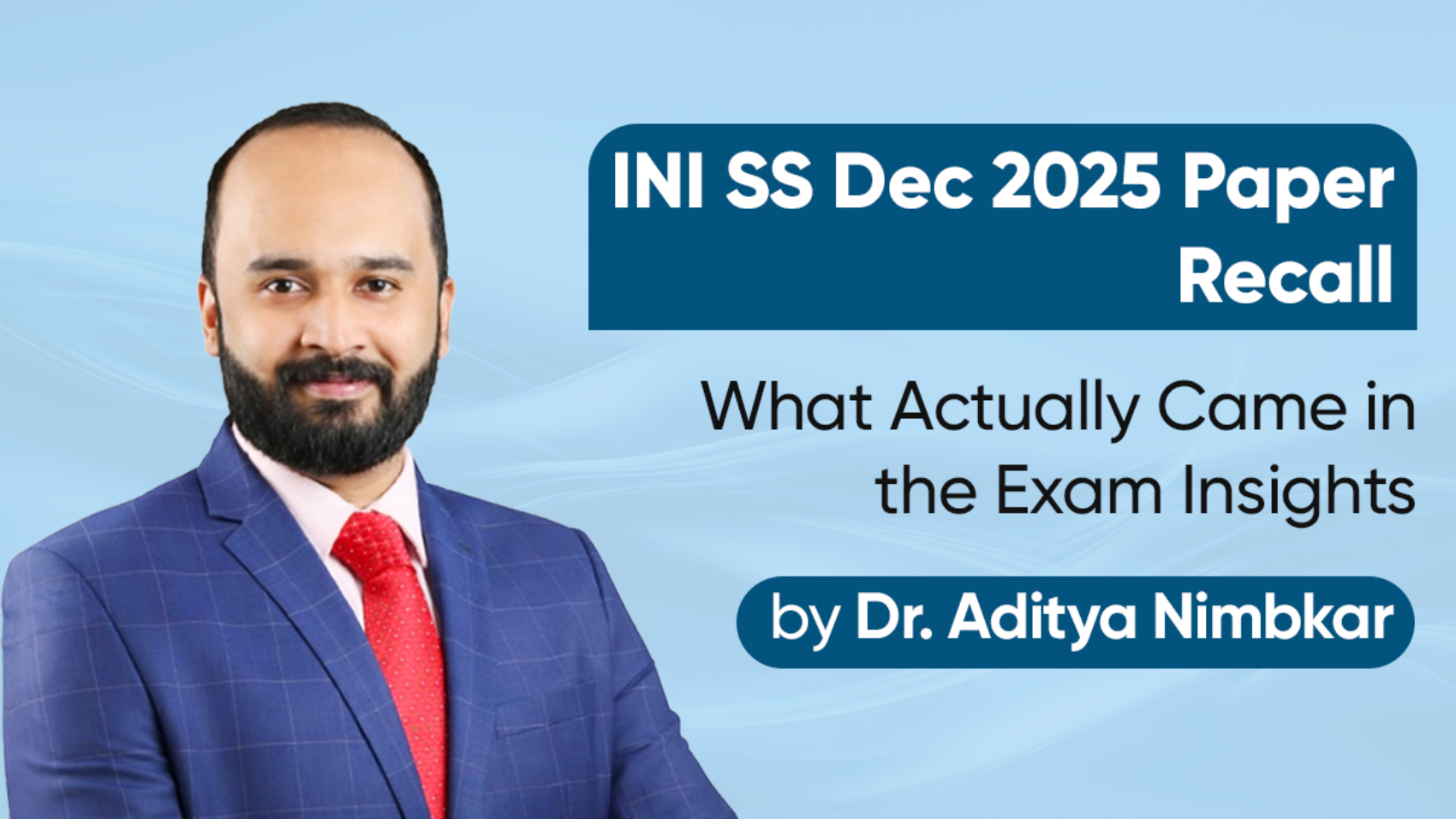
INI SS Dec 2025 Paper Recall: What Actually Came in the Exam Insights by Dr. Aditya Nimbkar 

0
0

For many aspirants preparing for INI SS, one of the most useful ways to revise is by looking at paper recalls. They give a real sense of how concepts are tested and where the examiners focus. 

In this session, Dr. Aditya Nimbkar walked through several questions that appeared in the December 2025 INI SS exam.  

Lecture details: 
1. Fertility-Sparing Management in Endometrial Carcinoma:- 

One question described a 30-year-old nulliparous woman diagnosed with grade 1, stage IA endometrioid endometrial carcinoma who still wished to preserve fertility. 

Normally, the standard treatment for Endometrial Carcinoma is hysterectomy, but in women who strongly desire future pregnancy, a fertility-preserving approach can sometimes be considered. 

When is fertility-sparing treatment acceptable? 

It is considered only in carefully selected cases: 

  • Type 1 endometrioid carcinoma 
  • Stage IA disease 
  • No lymphovascular space invasion (LVSI) 
  • No evidence of extra-uterine spread 
Preferred Management 

The treatment used in such cases is high-dose progestin therapy, most commonly: 

  • Medroxyprogesterone acetate 
  • Dose: 400–600 mg per day 

Another option is placing a levonorgestrel-releasing intrauterine system (LNG-IUS) such as Mirena intrauterine system, sometimes combined with oral progestins initially. 

Follow-up is Critical 

These patients require strict monitoring, which includes: 

  • Endometrial sampling every 6 months 
  • Assessing regression or progression of disease 

If the disease progresses, definitive surgery (hysterectomy) must be advised. Even if fertility treatment succeeds and pregnancy occurs, hysterectomy is usually recommended once childbearing is complete. 

2. Lifetime Risk of Ovarian Cancer in BRCA Mutation:- 

Another question asked about the lifetime risk of ovarian cancer associated with BRCA1 mutation. 

To understand the significance, it helps to compare it with the background risk. 

Ovarian Cancer Risk 
  • General population: 1–2% 
  • BRCA1 mutation: 35–45% lifetime risk 
  • BRCA2 mutation: 10–20% lifetime risk 

Because of this high risk, women with confirmed BRCA mutations are often advised risk-reducing surgery. 

Preventive Strategy 

Recommended measures may include: 

  • Risk-reducing salpingo-oophorectomy 
  • Sometimes prophylactic mastectomy 
  • Surgery usually advised around 35–40 years, after completing family planning. 
3. Family History of Breast and Ovarian Cancer: What Should Be Done? 

Another scenario involved a 30-year-old woman using oral contraceptive pills for three years, with a strong family history: 

  • Mother diagnosed with Breast Cancer at 47 years 
  • Sister diagnosed with Ovarian Cancer at 36 years 

The key question was: What is the most appropriate advice? 

Correct Approach 

The best step is genetic testing for BRCA mutation. 

Before considering any preventive surgery, it is important to confirm whether a hereditary mutation is present. 

Important Points About OCPs 

Interestingly, oral contraceptive pills: 

  • Increase risk of breast cancer slightly 
  • But reduce the risk of ovarian cancer 
  • Also reduce the risk of endometrial cancer 

This protective effect occurs because: 

  • Progesterone causes endometrial atrophy 
  • Ovulation suppression reduces ovarian epithelial injury and repair cycles 
4. Bakri Balloon Maximum Capacity:- 

A practical obstetrics question asked about the maximum capacity of the Bakri Balloon. 

Answer is 600 mL 

Why? 

The Bakri balloon is used to treat postpartum hemorrhage, especially atonic PPH, in which the uterus does not contract following delivery. 

Mechanism 

The balloon is filled with fluid and placed inside the uterus. Hydrostatic pressure is produced as a result, which  

  • Stops bleeding sinuses.  
  • Creates a tamponade effect.  
  • Aids in stopping bleeding  

The balloon is usually stored for a maximum of 24 hours. Surgical treatment, such as a hysterectomy, may be necessary if the bleeding persists or the uterus does not regain tone. 

Alternative Technique 

A commonly used low-cost alternative is the Shivkar’s Balloon Pack, which uses a condom attached to a Foley catheter and filled with saline to create the same tamponade effect. 

5. Misoprostol Dose in Postpartum Hemorrhage:- 

Another tricky question focused on the dose of Misoprostol used in postpartum hemorrhage treatment. 

The key detail was the route of administration. 

Therapeutic Oral Dose 
  • 600 micrograms orally 

Students often mark 1000 micrograms, but that dose is usually associated with rectal administration. 

The exam question specifically mentioned oral dosing, which makes 600 micrograms the correct answer according to World Health Organization guidelines. 

Final Takeaway 

Paper recalls like these give a clear idea of how concept-based clinical thinking is tested in exams like INI SS. Instead of rote memorization, the focus is often on understanding guidelines, risk assessment, and real-world management decisions. 

If you want more such exam-focused discussions, concept breakdowns, and clinical insights, make sure to explore more sessions from Conceptual OBG and stay updated with expert explanations that simplify even the most complex topics. 

Share

FET Exam

How to Prepare for the FET Exam in One Month? A Complete Guide for OBG Aspirants 

0
0

Estimated reading time: 7 minutes

Preparing for the FET Exam in just one month away which may sound very overwhelming, especially if you’re targeting FET Obstetrics and Gynecology. But here’s the final truth, if you have a focused preparation strategy, and the right study material, disciplined execution, then cracking the FET entrance examination in 30 days is absolutely achievable. 

This blog is designed specifically for doctors who are preparing for FNB programs in Obstetrics and Gynecology and those appearing for NEET SS Obstetrics and Gynecology, level exams. If you are short on time and need clarity, direction, and confidence, this guide is for you. 

Understanding the FET Examination 

The Fellowship Entrance Test (FET examination) is basically conducted for admission into various FNB programs which come across different specialties. But for COBG aspirants, the exam tests your deep conceptual understanding, clinical decision-making skills, and how familiar you are with official recent guidelines.  

The FET exam is not about just memorizing facts, it perfectly accesses how well you apply your postgraduate knowledge in real clinical scenarios, which are similar in standard to SS Obstetrics and Gynecology and NEET SS. 

FET Exam Pattern: What You Need to Know First 

Although before planning your studies, y6ou need to understand the exam pattern is non-negotiable. 

Key Highlights of the FET Exam Pattern: 
  • Mode: it will be the computer-based test 
  • Question type: Single best answer MCQs 
  • Focus: the focus should be on clinical application and problem-solving task 
  • Specialty-specific paper (where COBG candidates get FET Obstetrics and Gynecology paper) 

The FET 2026 exam pattern is expected to remain consistent with the previous years, which highlights the concept-driven questions rather than giving direct recall. Although reviewing the FET question paper from the previous sessions gives a very clear idea of how questions are framed. 

FET Syllabus for Obstetrics and Gynecology 

The FET syllabus for COBG covering significantly with NEET SS Obstetrics and Gynecology, which helps to make the preparation more streamlined for SS aspirants. 

Core Areas to Focus On: 
  • more possibilities of pregnancy 
  • Operative obstetrics 
  • Unproductiveness and reproductive endocrinology 
  • Gynecologic oncology 
  • Urogynecology 
  • Recent guidelines and protocols 
  • Imaging and case-based management 

Since the syllabus is very wide, the key is basically selective and strategic revision, not just exhaustive reading. 

One-Month FET Preparation Strategy (Week-Wise Plan) 

The first week is really about getting your bearings and figuring out where you stand. 

Here’s what you need to do: 
  • Take a complete run through the FET syllabus—just once, to get the lay of the land 
  • Go back to your standard notes and brush up on the high-yield topics 
  • Start working through topic-wise MCQs 
  • Look at how previous FET question papers were structured 

What you’re aiming for: Getting comfortable with the material, not mastering everything right away. 

Week 2: Building Your Strength Where It Matters 

This is honestly the make-or-break week of your entire preparation. 

Here’s what you need to do: 
  • Zero in on areas where you’re shaky or just okay—these need your attention 
  • Go through important guidelines and flowcharts again 
  • Solve mixed MCQs every single day 
  • Start practicing with a timer 

At this point, you should be doing more than just reading. Get your hands dirty with questions. Active practice beats passive reading every time. 

Week 3: Testing Yourself and Fine-Tuning 

This is where you stop being a student and start being your own evaluator. 

Here’s what you need to do: 
  • Take the full-length mock tests or specialty-specific ones 
  • If you really dig into the questions, you got wrong, don’t just move on 
  • Revisit the topics that you keep forgetting always 
  • Work on getting faster and more accurate 

This week is all about the closing the gap between knowing your stuff and actually performing under pressure. 

Week 4: Polishing Up and Building Confidence 

Don’t even think about picking up new topics now. 

Here’s what you need to do: 
  • You should stick to your own notes and the questions you’ve already marked 
  • You should focus on the important concepts that show up repeatedly 
  • Do some light MCQ practice just to keep yourself very sharp 
  • Actually, get some rest before exam day 

What you want right now is a clear head, steady nerves, and solid confidence. 

Smart Tips for COBG Aspirants 
  • Don’t collect a library of resources, stick to a few good ones. Too many sources will just eat up your time. 
  • Put your energy into topics that actually matter clinically. 
  • Don’t just memorize answers. Understand why something is right or wrong. 
  • Spend more time reviewing your mistakes than patting yourself on the back for correct answers. 
  • Stop comparing yourself to everyone else, it’ll only stress you out. 

When you’re working with limited time, these aren’t just tips, they’re survival tactics. 

Why Previous Year Questions Are Gold?

Going through old FET question papers and the FET 2026 paper (once it’s out) is honestly one of the smartest moves you can make. Here’s why: 

  • You start thinking like the person who’s writing the questions 
  • You spot which topics keep coming back 
  • You get better at eliminating wrong options quickly 

And if you’re also preparing for NEET SS Obstetrics and Gynecology, this same strategy works beautifully there too. 

Don’t Forget the Paperwork 

The admin stuff is just as critical as your actual studying. 

  • When the FET application form goes live online, fill it out carefully—and don’t wait till the last minute 
  • Grab your FET admit card the moment it’s available for download 
  • After you’re done with the exam, keep checking for the FET result announcement 

Missing a deadline can throw away all your hard work. Don’t let that happen. 

Conclusion  

Look, preparing for the FET entrance examination in just one month is tough—I’m not going to sugarcoat it. But it’s absolutely doable. With a solid plan, focused revision, and regular practice, COBG aspirants can do really well. 

Here’s the thing to remember: the FET examination isn’t looking for people who crammed everything the night before. It rewards people who understand concepts clearly, can make good clinical calls, and can stay calm under pressure. 

Stay disciplined, trust your preparation, and walk into the exam with confidence. One focused month can change your career trajectory. 

Share